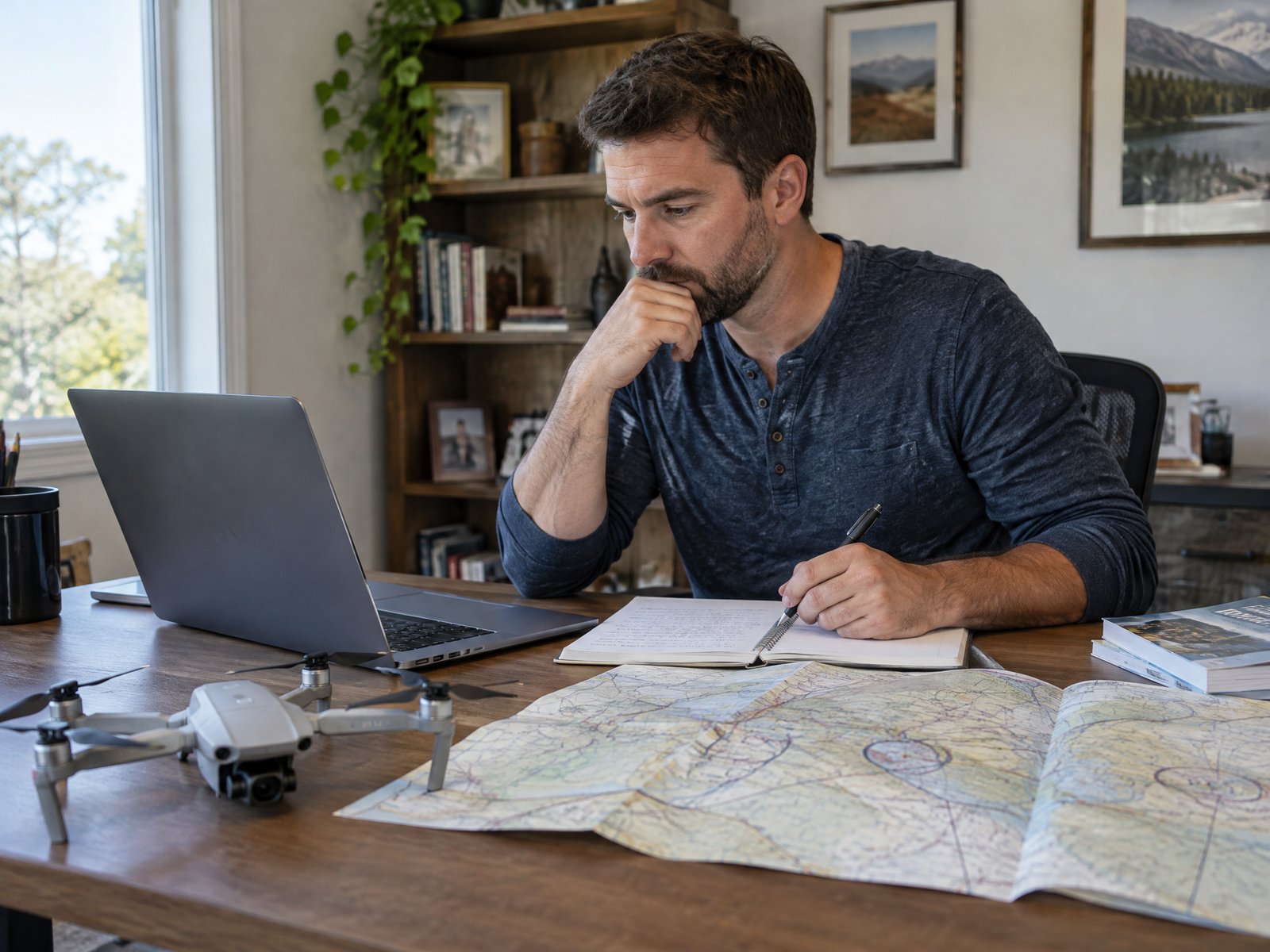
How to Hire a Construction Drone Provider
A practical guide to choosing the right drone partner for progress monitoring, earthworks, BIM comparison and inspections.
Choosing a drone course is easier with a clear goal: what you want to achieve, how you like to learn, and your budget — then compare schools on the same points.
1. Set your goal
Pass the Part 107 test, build flight confidence, learn a sector skill (mapping, thermal, spraying, public safety) or qualify as an instructor.
2. Pick a format
Online self-paced, live virtual, in-person classroom and flight field, hybrid, or on-site training for your team.
3. Check hands-on hours and equipment
Ask how many hours you will fly, how many students share each drone, which drones and software you will use and whether equipment is supplied.
4. Check instructors and wording
Ask who teaches and what credentials they hold. Schools prepare you; the FAA issues the Remote Pilot Certificate.
5. Compare on the same points
Compare price, what is included (the FAA test fee is usually separate), retake policy and next session dates, then contact the school directly.
Questions to Ask Every Provider
- • How many hands-on flight hours are included, and how many students per instructor?
- • Which drones and software will I train on, and are they supplied?
- • Is the FAA knowledge test fee included, and what is your retake policy?
- • What credentials and commercial experience do your instructors have?
- • Do you offer group, military or first-responder discounts, or on-site team training?
- • What do I receive at the end of the course?
Red Flags to Watch For
- • No portfolio or sample deliverables available
- • Cannot specify the accuracy of their outputs
- • No professional processing software mentioned
- • Quoting significantly below market rates
- • No insurance documentation available
- • No site safety documentation or experience on active job sites